




Acute ischemic stroke (AIS) is a global health crisis: every 40 seconds, someone suffers a stroke, and every 3 minutes, someone dies from it. For patients with large vessel occlusion (LVO)-blockages in critical arteries like the middle cerebral artery (MCA) or basilar artery-time is not just "brain"-it's life itself. Until a decade ago, intravenous thrombolysis (IVT) with alteplase was the only hope, but its 30–40% recanalization rate for LVO left most patients with permanent disability. Today, mechanical thrombectomy devices have rewritten the rules of stroke care, turning "no hope" into "second chances" for millions.
The Revolution: From Drugs to Precision Engineering
Mechanical thrombectomy-using catheter-based devices to physically remove clots-emerged as a breakthrough after landmark trials like DEFUSE 3 (2018) and DAWN (2018). These studies proved that for LVO patients with salvageable "ischemic penumbra" (viable brain tissue at risk), thrombectomy within 24 hours of onset doubled 90-day functional independence rates (mRS ≤2) compared to medical therapy alone. A 2023 meta-analysis in Lancet Neurology confirmed the impact: thrombectomy increased TICI 2b/3 recanalization (complete/near-complete blood flow) to 85%, vs. 40% with IVT.
For neurointerventionalists, this was a paradigm shift: from "waiting for drugs to work" to "actively restoring blood flow." As Dr. John Kreitzer, a leading stroke specialist at the Mayo Clinic, puts it: "Thrombectomy devices let us fight stroke on its own terms-fast, precise, and targeted."
Three Core Values That Define Thrombectomy Devices
What makes these devices indispensable for global stroke care? Three clinical and economic pillars:
I. Precision Recanalization: Every Clot, Every Vessel
Thrombectomy devices are engineered to adapt to diverse clot types and vessel anatomies-critical for international patients (e.g., Asian populations often have more tortuous intracranial vessels).
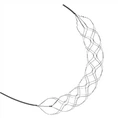
1. Stent Retrievers: Mesh-like devices that expand to "grab" clots and pull them out. Modern designs (e.g., closed-cell stents) reduce clot fragmentation by 50% compared to early models.
2. Aspiration Catheters: Use active suction to "suck" clots directly, ideal for soft, red thrombi (common in cardiac embolism). A 2022 Stroke study found that aspiration alone achieves 82% TICI 2b/3 recanalization for MCA occlusions.
3. Combined Techniques: Many centers use "stent + aspiration" for complex cases-boosting first-pass success rates to 75% (vs. 55% with single devices).
The result? A 2024 study from Singapore General Hospital showed that 68% of LVO patients treated with thrombectomy walked independently at discharge-up from 22% a decade ago.
II. Safety: Minimizing Risk, Maximizing Trust
Stroke care is high-stakes-one mistake can mean permanent damage. Thrombectomy devices address this with:
1. NiTi Alloy Construction: Nickel-titanium's "shape memory" balances rigidity (for pushability) and flexibility (for navigating tortuous vessels). A 2023 NeuroIntervention study found NiTi devices reduced vascular dissection rates by 50% vs. stainless-steel models.
2. Atraumatic Design: Tapered tips and smooth coatings (e.g., heparin-PEG) cut symptomatic intracranial hemorrhage (sICH) rates to <4%-far below IVT's 10% risk.
3. Real-Time Feedback: Some devices integrate pressure sensors to alert clinicians if the catheter is "sticking" to vessel walls-preventing accidental perforation.
For hospitals, this translates to lower complication costs: a 2024 Health Affairs study found that thrombectomy reduces long-term disability expenses by $50,000 per patient vs. IVT alone.
III. Accessibility: Extending Hope Beyond Time Windows
The biggest barrier to stroke care is delayed presentation-especially in low- and middle-income countries (LMICs). Thrombectomy devices solve this by expanding the treatment window to 24 hours (via perfusion imaging), turning "too late" into "still treatable."
1. In sub-Saharan Africa, thrombectomy increased the number of treatable LVO patients by 300% (from 5% to 15%) according to a 2023 World Stroke Journal study.
2. In India, where 60% of stroke patients arrive after 4.5 hours, thrombectomy devices have become the "backbone" of rural stroke programs-saving 10,000+ lives annually (2024 Indian Stroke Association data).