



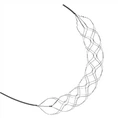
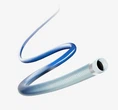
The harm and mortality rate of stroke are very high. Once a patient has a stroke, it will bring unspeakable harm to a family. Acute stroke is more dangerous, with high mortality, high disability, high incidence and high recurrence rates. Acute stroke vascular thrombectomy is an emerging neurointerventional treatment method. Within a certain time window, a catheter and a thrombectomy device are placed in the femoral artery, and the blood clot is removed along the blood vessels to the blocked part of the brain.
What is acute stroke vascular thrombectomy?
Acute stroke vascular thrombectomy is an interventional surgery for the treatment of acute ischemic stroke, all of which are aimed at restoring the patency of blocked blood vessels to restore blood supply to the brain, reduce the patient's nervous system damage, and improve survival rate and quality of life. Cerebral vascular thrombectomy requires the removal of the things that block the patient's cerebral blood vessels. In this way, the patient's cerebral blood vessels can be reopened faster, and the brain cells can restore blood supply, so that the patient does not have or alleviates brain dysfunction. If the blocked blood vessels of the patient cannot restore blood supply as soon as possible, the brain tissue corresponding to the blood vessels will slowly die without blood flow, thus causing irreversible brain function damage. To solve the problem of brain cell apoptosis, emergency surgery is required to remove the blocked blood vessels by surgery, so that the blood vessels can be restored and unblocked. After the blood vessels are unblocked, the brain cells and brain tissues that are not completely necrotic can be slowly restored by blood supply, which can avoid hemiplegia and save lives. This is acute stroke cerebrovascular thrombectomy.
Acute stroke vascular thrombectomy first requires doctors to use X-rays or other imaging techniques to guide the guidewire catheter through the vascular sheath to the artery close to the brain, and inject contrast agents to observe the condition of the blood vessels. Then, the artery should be punctured to introduce the thrombectomy device to the position near the blocked blood vessel. Then, special instruments should be used to capture the embolus and remove the thrombus from the body. Finally, guidewires, catheters, balloons and other instruments are used to perform vascular dilation, shaping and other operations to restore smooth blood flow. The time window for vascular thrombectomy is also very important, generally within 8 hours after the onset of the disease. In addition, a comprehensive assessment of the patient is required before surgery, including physical examination and impact assessment.