



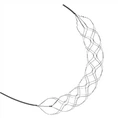
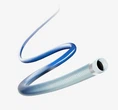
ADAPT technology (A Direct Aspiration first-Pass Technology, ADAPT) is an endovascular treatment method that uses direct aspiration as thrombectomy technology. This technique requires direct aspiration thrombectomy using a traceable, large-bore aspiration catheter.
In 2015, five major endovascular stroke clinical trials were announced, confirming that patients with stroke caused by acute large artery occlusion can benefit from endovascular treatment. This milestone progress formally established the role of mechanical thrombectomy in large vessel occlusion. The status of first-line treatment marks the arrival of the era of thrombectomy.
In the past two years, with the emergence of ADAPT technology, stent retriever thrombectomy or aspiration catheter has become a hot topic widely discussed in clinical practice. The 2019 AHA/ASA guideline update lists ADAPT technology as an IB recommended therapy, providing strong evidence support for the clinical application of ADAPT technology.
Research results show that 78% of patients can successfully achieve TICI grade 2b/3 blood flow reconstruction using ADAPT technology alone. If combined with stent thrombectomy technology, ideal recanalization can be further increased to 95%.
The main advantages of ADAPT technology are simpler technical operation, short opening time, low bleeding rate, relatively high safety, increased proportion of third-level recanalization, and reduced distal embolus escape events.
The diameter of the main suction catheter commonly used in clinical practice is between 0.068"-0.072". The new generation aspiration catheter has further improved its positioning ability and can be pushed directly into position. Aspiration technology not only achieves good results in opening thrombotic occlusions in proximal large vessels, but also shows a good trend in more distal medium-sized vessels.
For patients with a large thrombus load (such as the end of the ICA), tandem lesions, and posterior circulation lesions, the advantages of thrombectomy by aspiration catheter are very obvious. 2. For patients with middle cerebral artery embolism, if the microcatheter and microguidewire do not need to pass through the lesion, they only need to bring the suction catheter directly to the thrombus proximal to the lesion. In this case, direct aspiration and thrombectomy will be considered. 3. For patients with stenotic lesions, aspiration and thrombectomy are not preferred. Considering the limitations of proximal stenosis, the distal thrombus is difficult to aspirate.
Direct thrombus aspiration technology has become a mainstream opening technology alongside stent thrombectomy in acute intracranial large vessel occlusion thrombectomy. Each center has a special preference and can be used alone or in combination according to the vascular occlusion and vascular conditions. Some experts believe that the current use of large-bore intermediate catheter direct aspiration technology (ADAPT) has a higher recanalization rate and shorter opening time than stent retriever thrombectomy. With the development of materials, the update of research, and the promotion of domestic consumables, ADAPT technology may become a trend in emergency thrombectomy.