



In the field of neurointervention, the treatment of complex vascular lesions such as cerebral arteriovenous malformations (AVMs) and dural arteriovenous fistulas (DAVFs) has long faced the dual challenges of "precise occlusion" and "safe operation." Traditional solid embolic agents (such as coils and polyvinyl alcohol particles) struggle to completely fill irregular vascular nidus and are prone to displacement, making them inadequate for high-precision treatment. However, liquid embolic systems, leveraging innovations in materials science, achieve a closed-loop therapeutic cycle of "liquid flow-controlled coagulation-permanent occlusion," becoming a core technology enabling neurointerventional procedures to transition from "palliative care" to "curative embolization."
Liquid embolic systems have innovated in materials, and their non-adhesive properties offer multiple advantages over traditional embolic methods. For example, the Onyx liquid embolic agent in our LAVA line, whose core ingredients are ethylene-vinyl alcohol copolymer (EVOH), dimethyl sulfoxide (DMSO) solvent, and tantalum powder developer, achieve three key breakthroughs:
1. Non-adhesive Advantage: Unlike traditional adhesive embolic agents, after Onyx is injected into the blood vessel, the DMSO rapidly diffuses and the EVOH polymer precipitates to form a sponge-like solid. This prevents adhesion to the inner wall of the microcatheter, thus avoiding complications such as difficult extubation and vascular rupture caused by catheter adhesion.
2. Controllable Release: The range of embolic agent diffusion can be precisely controlled by adjusting the injection pressure and speed.
3. Visual Stability: The uniform distribution of tantalum powder enables full visualization of the embolic process. The surgeon can monitor the embolic agent filling pattern in real time through fluoroscopy to avoid over-embolization or incomplete coverage of the lesion.
The mechanism of action of the liquid embolic system has evolved from "liquid flow" to "cast embolization." The core advantage of the liquid embolic system lies in "complete filling that conforms to the anatomical shape of the blood vessels."
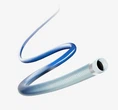
1. Microcatheter Delivery: The microcatheter is used to selectively direct the lesion's feeding artery, ensuring precise delivery of the embolic agent to the lesion.
2. Curing Process: After DMSO diffuses into the bloodstream, the EVOH polymer gradually precipitates, forming a "cast" that conforms to the morphology of the vascular nidus. This completely blocks blood flow and induces endothelialization, achieving permanent occlusion.
The liquid embolic system solves the pain points of traditional embolic agents, such as "difficult to completely fill and high operational risks", through the triple innovation of "non-adhesive materials + controlled release technology + cast embolic mechanism", providing patients with complex vascular diseases with a safer and more efficient treatment option.