


Aspiration thrombectomy is a minimally invasive procedure that involves the insertion of a catheter into a blood vessel to remove blood clots that are obstructing blood flow. The procedure is commonly used to treat conditions such as pulmonary embolism, deep vein thrombosis, and acute ischemic stroke. Over the years, catheter design has improved significantly, with the introduction of specialized catheters such as super bore catheters that are designed for aspiration thrombectomy.
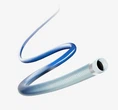
Super bore catheters are larger than conventional catheters that are typically used in aspiration thrombectomy (6 French). This larger size enables the catheter to aspirate larger clots, resulting in shorter reperfusion times and better clinical outcomes. The catheter is made up of a flexible and steerable shaft that allows the catheter to navigate through blood vessels and around curves to reach the clot. The catheter tip is designed to create a vacuum, which enables it to aspirate thrombus from the blood vessel without damaging the vessel wall.
One of the advantages of super bore catheters is their ability to aspirate large clots. This is particularly important in cases of acute ischemic stroke, where time is of the essence, and the faster the clot can be removed, the better the patient's outcome. Super bore catheters have been shown to have higher recanalization rates, meaning that they are more effective at restoring blood flow to the affected area.
Research has also shown that super bore catheters reduce the number of passes required to remove the clot, thus reducing procedure times and minimizing the risk of complications.
Another advantage of super bore catheters is their ability to navigate through small vessels. Due to their flexibility and steerable shaft, these catheters can easily move around curves and reach small blood vessels. This makes them particularly useful in treating deep vein thrombosis, where the clot may be located in a smaller vessel. Super bore catheters can also be used in conjunction with other catheters to treat more complex cases, such as cases of multiple blood clots.
Super bore catheters are also safe and easy to use. Due to their larger diameter, they are less likely to get clogged or damaged during the procedure. The catheter's vacuum system is also designed to prevent the clot from being dislodged and causing further damage to the blood vessel. The catheter can be used with a variety of aspiration systems, meaning that it can be easily integrated into existing workflows.
All in all, super bore catheters offer many advantages over conventional catheters in aspiration thrombectomy procedures. They are more effective at aspirating larger blood clots, reducing procedure times, and improving clinical outcomes. They also offer better navigation capabilities, reducing the risk of complications and making them ideal for treating complex cases. As technology continues to evolve, we can expect to see even more advanced catheters that will further improve aspiration thrombectomy procedures and ultimately benefit patients.