



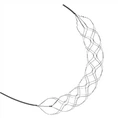

Neurointerventional therapy has been increasingly used as a very effective treatment method. Currently, treatment strategies for acute cerebral infarction are constantly innovating, the most representative of which are the two prospective treatment methods of stent combination with aspiration and aspiration thrombectomy. So how to choose the appropriate treatment plan in practice?
For the combination of aspiration thrombectomy and stent retriever, the accuracy and speed of early response are obviously the most important in the treatment of acute cerebral infarction. Failure to achieve effective treatment within the correct time often results in worsening of the patient's condition and damage to the nervous system. Therefore, the initial treatment plan should take into account the patient's overall condition, such as age, medical history, symptoms, location and size of the lesion, etc.
As a method of treating acute cerebral infarction, aspiration thrombectomy has a very high accuracy and speed, which has been widely recognized in practice. The hose used to extract the thrombus is 5/6 diameter and is an accurate technology that allows for accurate measurement and treatment while ensuring a relatively smooth operation. One of the advantages of aspiration thrombectomy is that compared with stent combination, it has better biological adaptability, can better promote thrombus and remove thrombus quickly, thereby achieving better therapeutic effects. Compared with stent retriver combination with aspiration catheter, aspiration thrombectomy has obvious advantages in shortening treatment time, improving patient symptoms, and reducing sequelae.
However, there are some disadvantages to aspiration thrombectomy. First, it does not solve the problem of being unable to outpace the size of a clot by its own destructive power. Secondly, because the effect of thrombus aspiration in removing thrombus depends on the viscosity of thrombus and the amount of fibrin, this brings certain difficulties to the surgeon during the operation. Finally, some adverse reactions such as intracranial hemorrhage, insomnia, and muscle spasms may occur during the aspiration and thrombectomy process, and the occurrence of these adverse reactions may further worsen the patient's condition and quality of life.
Compared with aspiration thrombectomy, stent retriever combined with aspiration therapy has shown better results in treating large thrombus. A stent retriever combined with aspiration can handle large clots very easily and achieve maximum therapeutic effect because the stent allows thrombolytic drugs to stick to the surface of the clot to enhance clot removal. The stent retriever combined with aspiration can also help the surgeon in charge of the surgery better control the depth and amplitude of his treatment, thereby more accurately measuring the size and location of the lesion. At the same time, because the stent retriever combined with aspiration can overcome their respective shortcomings, the thrombus can be eliminated more effectively, allowing patients to obtain a more perfect treatment effect.
When choosing between aspiration and stent retriever combined with aspiration, the key is to consider each patient's unique condition and treatment needs in practice. If the size of the blood clot is small, you can choose thrombectomy aspiration. If the blood clot is large, you can choose combined stent treatment. No matter which treatment plan is chosen, it should be personalized based on the patient's age, medical history, symptoms and other factors, so as to restore the patient's health as soon as possible and reduce the impact of the disease on the patient's life.
In summary, both treatment options, aspiration thrombectomy and stent retriever combined with aspiration have excellent performance and should be selected taking into account factors such as patient needs and treatment duration. Therefore, in practice, doctors should choose the most feasible and effective first-line neurointerventional treatment strategy based on each patient's specific conditions and treatment needs to achieve better therapeutic effects and promote further innovation in the field of neurologic therapy.