



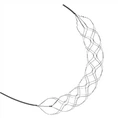

Mechanical thrombectomy has revolutionized the treatment of acute ischemic stroke and has emerged as one of the most promising treatments for restoring blood flow in patients with large vessel occlusions. In mechanical thrombectomy, two primary devices are utilized: stent retrievers and aspiration catheters. While both devices have proven to be effective in restoring blood flow, stent retrievers have gained immense popularity in recent years. However, the debate regarding the superiority of stent retrievers over aspiration catheters continues.
First, let us understand the basic principles of how these devices work. Stent retrievers are endovascular devices that are used to trap and extract blood clots from occluded vessels. The device consists of a nitinol wire stent that is attached to a delivery wire and covered with a mesh. Once inserted into the occluded vessel, the stent is deployed and opened up, allowing the mesh to entrap the thrombus, and then pulled out together with the clot. Aspiration catheters, on the other hand, use suction to pull the thrombus into the catheter tip and remove it from the vessel.
The most significant advantage of stent retrievers is their ability to open up the occluded vessel independently of thrombus fragmentation. This means that the stent retriever is more likely to restore complete blood flow and reduce the risk of distal embolization. Moreover, stent retrievers tend to be faster and more efficient than aspiration catheters, as they require fewer passes and have higher rates of achieving successful recanalization. They have also been associated with better clinical outcomes, including lower mortality rates, higher rates of functional independence, and fewer complications compared to aspiration catheters.
However, it is important to note that stent retrievers are associated with higher rates of endothelial injury, which may lead to neointimal hyperplasia and subsequent in-stent restenosis. Additionally, stent retrievers tend to be more challenging to use in tortuous vessels, such as the distal anterior cerebral artery and posterior circulation. Moreover, stent retrievers require a large-bore access catheter, which may not be feasible in patients with small or tortuous femoral arteries. Poor results may also come from the clot composition, location, and age.
On the other hand, aspiration catheters tend to be gentler on the vessel wall and have a lower risk of causing endothelial injury or dissection. They can also be used in tortuous vessels and are generally more straightforward to use, particularly in vessels that are difficult to access with a stent retriever. The implementation of ADAPT (aspiration-first, then stent retriever) protocols have shown promising results and are being investigated in clinical trials.
However, aspiration catheters have lower recanalization rates and may require longer procedural times, as several passes may be required to achieve successful recanalization. The lack of occlusion specificity may lead to suction loss and dislodgement of the clot.
In conclusion, both stent retrievers and aspiration catheters have their advantages and disadvantages, and the choice of the device used in mechanical thrombectomy procedures should be customized to the specific patient's needs. Stent retrievers are generally faster and more efficient, while aspiration catheters tend to be gentler on the vessel wall. But these devices can also be used in combination through ADAPT protocols and have approved a good result for patients.