



Aspiration Catheter
In the field of acute ischemic stroke (AIS), mechanical thrombectomy is divided into two major directions. One is thrombectomy through stent, which requires the use of thrombectomy stent retriever. The other is to directly remove intravascular thrombus through aspiration catheter. Aspiration treatment is a technology that has developed rapidly in recent years. Sometimes the aspiration catheter is also combined with the stent retrieval to remove thrombus. In 2013, Professor Turk and others first proposed ADAPT (A Direct Aspiration First-Pass Technology) technology, and thus pure thrombus aspiration technology was officially born, and various types of thrombus aspiration catheters were developed by major manufacturers. Today, the use of thrombus aspiration catheters for the treatment of acute ischemic stroke in the United States is comparable to the use of thrombectomy stent retriever.
Product Structure Introduction
The structure of thrombus aspiration catheters can be classified according to their constituent materials, and can also be distinguished according to the different functions of each segment of the catheter.
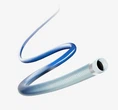
1. Material classification of thrombus aspiration catheter: Catheter seat + outer polymer layer + metal braid/coil-wrapped middle layer + polymer inner layer + distal radiopaque marker ring + distal tip + outer polymer surface coating with hydrophilic coating.
2. Structural classification of thrombus aspiration catheters: catheter proximal support section + catheter intermediate transition section + catheter distal soft section
The Functions of Each Section Are as Follows:
The proximal support end of the catheter: It is required to have good bending resistance and support, and provide good pushability for the catheter.
The intermediate transition section of the catheter: It is required to have appropriate strength and flexibility to better connect the proximal support end and the distal soft section, thereby promoting the pushing force of the proximal support section to be more effectively transmitted to the distal end of the catheter.
The soft segment at the distal end of the catheter: It requires good flexibility and a visible tip, which is beneficial to pass through the tortuous intracranial blood vessels.
Product Development Trends
In 2008, an American company launched a aspiration catheter with an inner diameter of 0.026 inch. It was also one of the first manufacturers to produce intracranial thrombus aspiration catheter products. Judging from the series of aspiration catheters launched by some companies in recent years, with the advancement of materials and improvements in technology, the size of aspiration catheters has gradually become larger. In terms of aspiration effect, it is generally believed that the larger the inner diameter of catheter, the better the aspiration effect-Bigger is the best!