



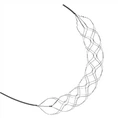
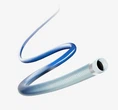
Functional requirements:
A neural thrombectomy stent retriever is usually a self-expanding stent that can be delivered into the intracranial large blood vessels through a microcatheter. It is used in acute occlusion situations to remove the thrombus in the large blood vessel occlusion and restore intracranial blood flow. Its design must meet the following requirements:
a. It can be delivered into the intracranial large blood vessels through a microcatheter and has appropriate radial force to adhere to the blood vessel wall.
b. It has the ability to contact and integrate with thrombus materials, taking into account the changes in thrombus composition and density.
c. It has the ability to protect and remove thrombi and reduce the risk of thrombus fragmentation and distal embolism.
d. It has a high first-pass recanalization rate, that is, the thrombus can be removed and blood flow can be restored in the first deployment.
e. Minimize damage to the lumen of the blood vessel wall during deployment and retrieval.
f. It can be redeployed multiple times in the target vessel or more distally when the thrombus is not completely removed.
Characteristics:
The construction of the thrombectomy stent can achieve optimal performance and meet the above design requirements by taking advantage of many variables in stent design. These characteristics are: material used (Material), raw material form (Form), manufacturing method (Fabrication), geometry (Geometry) and stent additions (Additions).
After many iterations, the safety and effectiveness of thrombectomy stent retriever have continued to improve. Combining new thrombectomy stent retriever with direct aspiration may be a good direction. Direct in vitro and in vivo animal model comparisons of various second- and third-generation stent retrievers can help clarify aspects of stent design that help improve clinical performance. Related tests have shown that stents with different cross-sections cannot be directly compared. Stent function tests, including pullback tests, also have relevant results. Thrombectomy trials have tested different devices and there are also relevant data.