


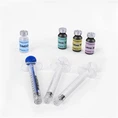
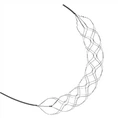
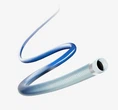
This article mainly introduces the use of aspiration catheters from three aspects. It is divided into preparation for use, instructions for use, and recommended aspiration procedures.
Preparation for use
1. Establish flushing flow: Establish a continuous flushing flow through the sheath or guide catheter.
2. Select the appropriate catheter: Select a catheter of appropriate size according to the target surgery and anatomical structure.
3. Remove the contents of the package: Using standard aseptic techniques, gently remove the contents of the package from the bag. Before removing the product, rinse the packaging hoop to activate the hydrophilic coating of the catheter. After hydration, do not allow it to dry.
4. Check the instrument: Gently remove the catheter and accessories from the hoop and inspect them before use to confirm that they are not damaged. If there is any damage, replace it with a new instrument.
5. Connect the valve and flush: Connect a compatible valve according to the target surgery and related instruments, and then flush the valve and catheter lumen.
6. Establish flushing flow again: Establish a continuous flushing flow through the catheter.
Directions for Use
1. Insert the catheter: Gently insert the catheter tip into a compatible sheath or guide catheter and over an appropriately sized guidewire. (Optional) Use a peel-away catheter sheath to insert the catheter tip into the sheath/guide catheter valve. After catheter insertion, withdraw and remove the peel-away catheter sheath.
2. Advance the catheter: Under fluoroscopic guidance, advance the catheter through the vascular system to the desired location.
Recommended Aspiration Procedures
1. Prevent Backflow: Tighten valve to prevent backflow.
2. Connect Syringe and Aspirate: Connect a partially filled syringe or aspiration system to the catheter and apply vacuum. Continue aspiration until the clot is removed or vacuum cannot be applied.
3. Deal with Obstructed Flow: If flow through the catheter is obstructed, do not attempt to empty the catheter lumen by infusion. Doing so may result in damage or patient injury. Remove the catheter by aspiration and flush the catheter outside the patient's body. If flushing is unsuccessful, replace the catheter.
4. Aspirate with Thrombectomy Device: If used with Thrombectomy Device, aspirate the catheter while withdrawing the Thrombectomy Device.
5. Continue Aspiration Until Withdrawal: Continue aspiration until the Thrombectomy Device and microcatheter are withdrawn from the catheter. If the Thrombectomy Device is difficult to withdraw, perform continuous aspiration to withdraw the catheter, microcatheter, and Thrombectomy Device as a unit into the sheath/guide catheter. Remove the sheath/guide catheter as necessary.