


Stroke is a leading cause of death and disability worldwide. In fact, it is the second leading cause of death globally and the third leading cause of disability-adjusted life years. Acute ischemic stroke (AIS) is the most common type, accounting for about 87% of all strokes. AIS occurs when there is a blood clot that blocks a blood vessel in the brain, leading to a lack of oxygen and nutrients to the affected area, ultimately resulting in brain damage or death. Thus, time is of essence when treating patients with AIS.
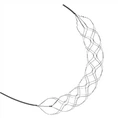
Current stroke treatment mainly consists of intravenous thrombolysis (IVT) or mechanical thrombectomy (MT). IVT is a time-sensitive treatment that aims to dissolve the blood clot using tissue plasminogen activator (tPA or alteplase). MT is a procedure that removes a blood clot using a mechanical device, such as a stent retriever or aspiration catheter. However, both treatments have their limitations.
intravenous thrombolysis has a narrow time window of 4.5 hours from symptom onset and has the risk of bleeding complications.
Mechanical thrombectomy, on the other hand, requires specialized equipment and expertise, making it only available in selected centers. Moreover, not all patients are suitable for mechanical thrombectomy, as the affected blood vessel may be too small or tortuous for the device to pass through.
Thus, there is a need for novel stroke treatments that are safe, effective, and widely accessible. The trial aimed to evaluate the safety and efficacy of a new type of mechanical thrombectomy, the intracranial thrombosis aspiration catheter, in patients with AIS.
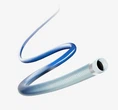
The intracranial thrombosis aspiration catheter is a thin, flexible catheter that is inserted through a small incision in the groin and threaded up to the blocked blood vessel in the brain. Once in position, the catheter is used to aspirate the blood clot, effectively removing it from the blood vessel and restoring blood flow to the affected area.
The trial included 129 patients with AIS who were ineligible for IVT or had failed IVT therapy. The patients were randomized to receive either ITAC or standard medical treatment. The primary endpoint was successful recanalization of the blocked blood vessel, defined as an arterial occlusive lesion reperfusion grade of 2b or 3 on the modified thrombolysis in cerebral infarction (mTICI) scale, within 6 hours of onset of symptoms.
The results of the trial showed that intracranial thrombosis aspiration catheter was safe and effective in recanalizing blocked blood vessels in patients with AIS. The rate of successful recanalization was significantly higher in the intracranial thrombosis aspiration catheter group (69.6%) compared to the medical treatment group (40.7%). Moreover, the rate of favorable functional outcomes, defined as a modified Rankin Scale score of 0 to 1, at 90 days was also significantly higher in the intracranial thrombosis aspiration catheter group (45.8%) compared to the medical treatment group (17.9%).
The RECOVER trial provides promising evidence for the use of aspiration catheter in the treatment of patients with AIS. However, more studies are needed to confirm its safety and efficacy and to identify the optimal patient population and treatment protocol. Nevertheless, this new therapy offers a potential alternative or complement to current stroke treatments, particularly in patients who are ineligible for or have failed IVT or MT.
Stroke remains a significant health burden worldwide, with AIS being the most common type. Current stroke treatments, including IVT and MT, have their limitations, creating a need for novel therapies that are safe, effective, and widely accessible. The RECOVER trial evaluated the safety and efficacy of a new type of MT, the intracranial thrombosis aspiration catheter, in patients with AIS, demonstrating its potential as an alternative or complement to current treatments. Nevertheless, further studies are needed to confirm its benefits and establish its role in stroke therapy.