



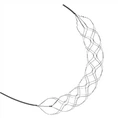

Intracranial aneurysms are a serious and potentially life-threatening medical condition. Aneurysms occur when a weakened blood vessel in the brain bulges outward, creating a sac-like structure that can potentially rupture, causing bleeding in the brain. While surgery has traditionally been the main treatment for intracranial aneurysms, advances in technology have led to the development of endovascular techniques that offer a less invasive approach to treatment. One such technique involves the use of detachable coils.
Detachable coils are thin, flexible wires made of platinum that are inserted into the aneurysm using a catheter. Once inside the aneurysm, the coil is detached from the catheter and expands like a spring, filling the aneurysm and causing blood to clot around it. This clotting prevents blood from flowing into the aneurysm, which reduces the risk of rupture. Over time, the body will heal around the coil, fully sealing the aneurysm and preventing further bleeding.
The use of cerebral aneurysm coils in the endovascular treatment of intracranial aneurysms has numerous advantages. First and foremost, it is a minimally invasive procedure that can be performed under local anesthesia, reducing the risk of complications associated with general anesthesia. This means that patients can typically go home the same day or the following day, allowing for a quicker recovery time.
In addition, the use of aneurysm endovascular coiling is associated with fewer complications when compared to traditional surgical techniques. Because the procedure does not involve a craniotomy (the surgical opening of the skull), there is a lower risk of damage to the brain tissue and less risk of postoperative infection. Research has also shown that patients who undergo endovascular treatment with detachable coils have a shorter hospital stay and a lower rate of complications compared to those who undergo traditional surgical treatment.
Moreover, endovascular treatment with endovascular detachable coils has been shown to be an effective long-term solution for the treatment of intracranial aneurysms. Studies have consistently demonstrated excellent occlusion rates (the percentage of aneurysms that have been completely sealed off) with the use of detachable coils. In addition, long-term follow-up studies have shown that the recurrence rate of aneurysms treated with detachable coils is lower than those treated with traditional surgical techniques.
While the use of aneurysm coiling has numerous advantages, there are some potential disadvantages that need to be considered. For example, because the coil must be detached and deployed within the aneurysm, there is a risk of the coil becoming dislodged and potentially causing a blockage elsewhere in the brain. Additionally, not all aneurysms are suitable for treatment with detachable coils, and some may require surgery or other endovascular techniques.
All in all, the use of tntracranial detachable coils for the endovascular treatment of intracranial aneurysms is a safe, effective, and minimally invasive approach that offers numerous advantages over traditional surgical techniques. It is important, however, that each patient is thoroughly evaluated by a team of medical professionals to determine whether treatment with detachable coils is appropriate for their particular condition. With careful consideration and appropriate use, detachable coils can provide an excellent long-term solution for the treatment of intracranial aneurysms.