



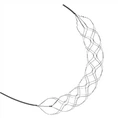
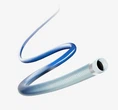
Hemorrhagic stroke refers to the type of stroke where bleeding occurs in the brain and can lead to permanent disability or death. Treating hemorrhagic stroke entails halting the bleeding and preventing rebleeding by repairing the damaged blood vessels in the brain. While open surgery may have been the preferred method in the past, a less invasive treatment known as endovascular coiling is now commonly used.
Endovascular coiling involves using a catheter to access the damaged blood vessel in the brain. Once the catheter is in place, small platinum coils are inserted into the aneurysm (a bulge in the blood vessel usually caused by a weakened blood vessel wall) through the catheter. These coils act to block off the aneurysm and halt bleeding into the brain. In effect, this treatment is similar in principle to placing a stopper in a leaky vessel.
Endovascular coiling has several advantages over traditional open surgery for treating hemorrhagic stroke. Firstly, it is a less invasive procedure, which means that a shorter hospital stay is required for recovery and there is less chance of complications arising. Secondly, the use of coils is a sophisticated and minimally traumatizing way to repair damaged blood vessels. Finally, patients treated with endovascular coiling have been shown to experience similar outcomes compared to traditional surgery.
In some cases, endovascular coiling may be used alongside traditional open surgery. For instance, in cases where a patient requires removal of a blood clot, endovascular coiling may be used to halt further bleeding while the blood clot is being removed.
Studies have shown that endovascular coiling is effective for treating hemorrhagic stroke. One study published in the New England Journal of Medicine in 2002 found that endovascular coiling was just as effective as traditional open surgery in treating ruptured aneurysms in the brain. In fact, the study found that patients treated with endovascular coiling experienced less disability and faster recovery times compared to traditional surgery.
Another advantage of endovascular coiling is that it is a highly effective treatment option. Studies have shown that endovascular coiling has a success rate of up to 80%, which is comparable to traditional surgical treatment options. This means that patients who undergo endovascular coiling have a good chance of recovering from their hemorrhagic stroke and avoiding further complications.
Overall, endovascular coiling is a promising and effective treatment for hemorrhagic stroke. This minimally invasive procedure offers patients faster recovery times, fewer complications, and similar outcomes compared to traditional open surgery. While there are limitations to this approach, ongoing research is working to establish the long-term efficacy of endovascular coiling. With continued advances in this field, endovascular coiling for treating hemorrhagic stroke promises to be a life-saving procedure for many patients.