



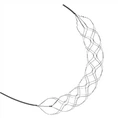

Rupture of intracranial aneurysms can lead to high mortality and disability rates in patients. The latest studies show that compared with the craniotomy and clipping group, early endovascular treatment can significantly reduce the disability rate of patients with aneurysmal subarachnoid hemorrhage. With the continuous updating of neurointerventional materials and technological development, especially the application of stents and balloons, the treatment of ruptured intracranial aneurysms has made great progress. However, the application of stents and balloons is relatively complicated in operation, and the complications related to the use of stents and balloons cannot be ignored.
The use of stents can effectively prevent detachable Coils from protruding into the tumor-bearing artery, protect the patency of the tumor-bearing artery, improve the dense embolization degree of the aneurysm, and change the hemodynamics in the aneurysm, reducing the probability of aneurysm rupture and recurrence. However, stent placement requires antiplatelet aggregation preparation, which can increase the risk of rebleeding before aneurysm treatment. In terms of the use of stents, excessive tortuosity and hardening of blood vessels can increase the difficulty of stent delivery and release. There are many disadvantages such as insufficient opening of the stent during surgery, poor adhesion to the wall, and acute occlusion of the tumor-bearing artery caused by acute thrombosis in the stent.
Balloon-assisted coil technology does not require the preparation of antiplatelet aggregation drugs during intracranial aneurysm embolization, and has the advantages of being able to protect the neck of the aneurysm and surrounding branch vessels, maintain the patency of the aneurysm-bearing artery, achieve dense embolization of the aneurysm, and achieve emergency hemostasis of aneurysm rupture during surgery. However, complications such as vascular endothelial cell damage, plaque detachment, intraoperative thrombosis, induced intraoperative rupture of aneurysms, and postoperative cerebral ischemia caused by prolonged balloon blood flow blockage caused by balloon filling should not be underestimated.