



Globally, stroke is one of the leading causes of death and disability. Ischemic stroke occurs when a blood clot obstructs an artery in the brain. Rapid and effective treatment is crucial in reducing the risk of long-term disability and increasing the chance of survival. The mechanical endovascular approach to stroke treatment has improved significantly in recent times. The balloon guided large bore distal access catheter with dual aspiration and stent retriever has become a standard approach for the management of ischemic stroke. This article explores the features and benefits of this technique.
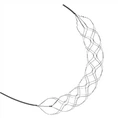
The balloon guided large bore distal access catheter with dual aspiration and stent retriever is a minimally invasive procedure that involves threading a wire through the femoral artery to the blocked blood vessel in the brain. The guide wire is advanced up to the clot, and a balloon catheter is then advanced over the wire. The balloon is inflated to create a seal around the vessel, and a large bore distal access catheter is advanced through the occlusion. The balloon catheter is then deflated, and the stent retriever is deployed through the large-bore catheter. The stent-retriever is designed to capture the clot, and the catheter is then pulled back, further extracting the clot from the brain. Dual aspiration is applied, actively suctioning the thrombus with an aspiration catheter. The balloon catheter is then re-inflated, providing temporary occlusion to prevent proximal embolization during stent retrieval. The stent-retriever and catheter are then removed, and imaging is done to confirm successful removal of the clot.
The balloon guided large bore distal access catheter with dual aspiration and stent retriever provides several benefits in the treatment of ischemic stroke. Firstly, it is a minimally invasive procedure, which results in minimal to no damage to the blood vessels. Additionally, the procedure can be rapidly performed, reducing the time to recanalization. The approach also provides a high rate of successful recanalization, and the stent-retriever can capture clots that are not accessible by other techniques. The Balloon Guided Large Bore Distal Access Catheter with Dual Aspiration and Stent-Retriever has also been shown to result in improved neurological outcomes in stroke patients.
The procedure has been found to be feasible and safe in clinical practice. It is also becoming the standard approach in many comprehensive stroke centers. Several studies have shown the effectiveness of this technique, with high rates of successful reperfusion, low complication rates, and good clinical outcomes for patients.
In summary, the balloon guided large bore distal access catheter with dual aspiration and stent retriever has revolutionized the management of ischemic stroke. The procedure provides minimally invasive and effective treatment for patients, resulting in rapid recanalization and improved neurological outcomes. The technique is becoming the standard approach in many comprehensive stroke centers worldwide. Therefore, it is crucial for healthcare professionals to be aware of the technique and its benefits to provide optimal care for stroke patients.