



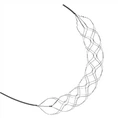
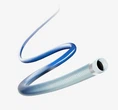
At present, a large number of international clinical studies have confirmed that stent thrombectomy can benefit patients with acute ischemic stroke. In recent years, aspiration thrombectomy techniques have also been increasingly used clinically, especially the direct aspiration technique (ADAPT) using large-bore intermediate catheters. ADAPT has a higher recanalization rate and shorter canalization time than the first choice of stent retriever thrombectomy. The emergence of ADAPT technology makes thrombectomy easier and easier.
The principle of ADAPT is to deliver a large-bore catheter to the location of the thrombus, and then use suction to remove the thrombus. Its emergence provides clinicians with a safe and fast suction channel. Talking about the advantages of ADAPT technology in the diagnosis and treatment of acute ischemic stroke, from a clinical practice, ADAPT technology is short in time, has high recanalization rate, low embolus escape rate and low complications, and is an ideal treatment for acute ischemic stroke. best choice.
High recanalization rate
ADAPT technology has a high recanalization rate, especially for the treatment of lesions at the end of the internal carotid artery or large-burden thrombus at the end of the basilar artery. For patients with heavy thrombus, double-stent treatment was often used in the past, but the patency rate was not high and there were side effects of vascular damage. On the other hand, the cost of double-stent treatment was also high. The emergence of ADAPT technology has effectively improved the recanalization rate of blood vessels.
Time consuming
Time is of the essence. For heavy thrombus, it took a long time to use double stents to pull through the thrombus, and it needed to be repeated many times. With the ADAPT technology, aspiration is very fast, and many lesions can be completed in just ten or twenty minutes. ADAPT technology is a great improvement in the time it takes to open blood vessels.
Low embolus escape rate
In the past, when pulling the thrombus, the microguidewire and microcatheter were required to cross the thrombus occlusion site, so it was easy for the embolus to escape during the pulling process. However, with the use of ADAPT technology, after selecting the correct microcatheter, there is no need to cross the thrombus occlusion site. Aspiration is performed directly through the occlusion site of the embolus, greatly reducing the incidence of distal embolus escape.
Easy to use
Using ADAPT to open the occlusion of the M1 segment does not need to pass through the occlusion site, nor does it need to reach the distal end when suctioning the catheter, which greatly reduces the difficulty of the operation. For the operator, ADAPT makes thrombectomy easier and easier. The simpler.
Looking back at the history of treatment of acute ischemic stroke, since 1995, treatment guidelines around the world have recommended thrombolytic therapy as the first recommended method in the treatment of patients with acute ischemic stroke. In 2015, five major endovascular stroke clinical trials were announced, confirming that patients with stroke caused by acute large artery occlusion can benefit from endovascular treatment. This milestone progress formally established the role of mechanical thrombectomy in large vessel occlusion. The first-line treatment status marks the arrival of the era of thrombectomy.
In the past two years, with the emergence of ADAPT technology, stent thrombectomy or catheter aspiration has become a hot topic widely discussed in clinical practice. The 2019 AHA/ASA guideline update lists ADAPT technology as an IB recommended therapy, providing strong evidence support for the clinical application of ADAPT technology
It can be seen from the entire historical progress that mechanical thrombectomy has gradually progressed with the improvement of technical materials. I believe that with the development of materials, more research updates, and localized price reductions, ADAPT technology will be an inevitable development trend in emergency thrombectomy in the future.