


Introduction to Blood Clot Types
Before introducing the thrombus aspiration catheter, let us first introduce the target of the thrombus aspiration catheter - thrombus. Thrombus can be roughly classified into the following four categories:
1. White thrombus: In the early stage of thrombosis, it is mainly composed of platelets. Under a microscope, a thrombus that is almost entirely composed of platelets is called a white blood thrombus.
Characteristics: It looks like small gray-white nodules or vegetations when observed with the naked eye. The surface is rough, the texture is firm, and it adheres closely to the blood vessel wall and is not easy to fall off.
2. Mixed thrombus: The platelets network some red blood cells when the white blood clot extends upward, then a mixed thrombus is formed.
Characteristics: Appearance is rough, dry, cylindrical, adherent to the blood vessel wall, and sometimes gray-white and brown strip-like structures can be identified.
3. Red thrombus: The thrombus formed is called red thrombus when a large number of red blood cells coagulates.
Characteristics: It appears dark red to the naked eye. It is moist when fresh. It has a certain elasticity, and has no adhesion to the blood vessel wall;
4. Fibrous thrombus: It is mainly composed of fibrin-rich thrombus;
Characteristics: Hyaline thrombus occurs in the blood vessels of microcirculation and is mainly in capillaries, so it can only be observed under a microscope. It is also called microthrombus.
How the Aspiration Catheter Works
Principle of aspiration flow rate:
When the aspiration catheter is performing aspiration, the blood flow rate in the catheter is proportional to the aspiration pressure, and is proportional to the fourth power of the inner diameter of the catheter. Therefore, when the aspiration catheter is working, the system should first be provided with continuous and stable aspiration pressure, and will not cause loss over time. Furthermore, under reasonable circumstances, choose the aspiration catheter with the largest inner diameter for the patients.
Principle of Aspiration Force:
When the aspiration catheter is performing aspiration process, there is a quantitative index of the aspiration force. Aspiration force = Thrombus Removal Force (TRF). It can be approximated by the formula: TRF ∝ Catheter inner diameter × vacuum degree. The aspiration force and the cross-sectional area of the lumen of the aspiration catheter is directly proportional to the pressure difference, which is similar to the principle of suction flow rate.
Thrombus Aspiration Process
According to different types of thrombus, it can be divided into the following two specific situations:
1. When the thrombus is a fresh red thrombus or a mixed thrombus, and the size of the thrombus is ≤ ID (aspiration catheter), negative pressure aspiration is started when the tip of the catheter begins to contact the thrombus, and the thrombus will be completely sucked into the lumen of the catheter. So the pearls are sucked out of the body like sucking pearls due to the continuous aspiration force when drinking pearl milk tea, thus restoring the blood flow in the distal blood vessels;
2. When the thrombus is a hard white thrombus or fibrous thrombus, and the size of the thrombus is > ID (aspiration catheter), negative pressure aspiration is started when the tip of the catheter begins to contact the thrombus, and the thrombus will be sucked into the tip of the catheter. In the end, it is pulled out of the body together with the catheter under continuous negative pressure, thereby restoring the distal blood flow. in the process of aspiration the thrombus, the functions of "pumping" and "suction" both exist, and both of them work together. It is this combination of pumping and suction that has created the status of ADAPT technology in the industry.
Aspiration Catheter Research and Development Direction
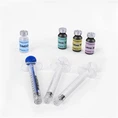
Based on the above introduction to the types of thrombus and the analysis of the principle of aspiration catheter for thrombus aspiration, we can know the two general directions for the design of thrombus aspiration catheter. The first is to use a stable vacuum to generate negative pressure during the aspiration process. At present, clinicians use negative pressure aspiration pumps when performing aspiration operations, which can produce a continuous and stable vacuum, which is conducive to the ingestion and aspiration of thrombus. Some doctors also use a combination of two 60ml snap syringes. The simple negative pressure generator created by the syringe can maintain the vacuum for a relatively short time, which is not conducive to the catheter sucking hard and large thrombus.
The second is to increase the inner diameter of the aspiration catheter while keeping the outer diameter of the catheter unchanged to increase the possibility of ingesting thrombus at the tip of the catheter and increasing the thrombus aspiration force. Since Professor Turk and others first proposed ADAPT(A Direct Aspiration First-Pass Technology) in 2013, intracranial thrombus aspiration catheter products have developed extremely rapidly. Based on the theoretical basis of the aspiration principle, major manufacturers are currently providing vacuum pumps with stable negative pressure and increasing the inner diameter of the aspiration catheter. Product research and development is carried out in two directions.