




As the treatment of cerebral aneurysms continues to evolve, advances in endovascular aneurysm management have led to significant improvements in patient outcomes. This article will focus on two specific advancements in endovascular aneurysm management: coiling and adjunctive devices.
Coiling refers to the process of filling the aneurysm with coils, which are typically made of platinum, nickel-titanium alloy, or stainless steel. This approach is minimally invasive, as the coils are introduced through a small incision in the patient's groin and guided through the blood vessels to the location of the aneurysm. Once in position, the coils are released, and they expand to fill the aneurysm, effectively occluding the blood flow and preventing further growth or rupture.
One advantage of coiling is that it avoids the need for an open surgical procedure, which can reduce the risk of complications and shorten recovery times. Additionally, coiling can be performed under local anesthesia, which is generally safer and more comfortable for the patient.
Despite these benefits, coiling does have some limitations. For example, it may not be effective for larger aneurysms, as the coils may not be able to completely block the blood flow. Coiling may also be less effective in cases where the aneurysm has a complex shape or is located in a difficult-to-reach area of the brain.
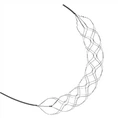
To address these limitations, adjunctive devices have been developed to complement the coiling procedure. One such device is the stent-assisted coiling technique, in which a small metal mesh tube is placed within the blood vessel to provide support for the coils and improve their effectiveness. This approach has been shown to be particularly effective for complex aneurysms, as it allows for greater control over the position and shape of the coils.
Another adjunctive device that has been developed is the flow diverter stent, which is designed to redirect blood flow away from the aneurysm and promote the formation of a clot. This approach is particularly effective for large and complex aneurysms that may not be amenable to other treatment options.
Overall, the advances in endovascular aneurysm management have provided a significant benefit to patients, allowing for safer and more effective procedures with shorter recovery times. While coiling and adjunctive devices have their limitations, ongoing research and development are likely to continue to improve these techniques and expand their applicability to an even wider range of aneurysms. As such, it is likely that endovascular aneurysm management will continue to play an important role in the treatment of cerebral aneurysms for years to come.