



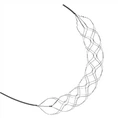

The use of large-bore aspiration catheters has revolutionized the treatment of acute ischemic stroke. This minimally invasive technique allows for the rapid removal of clots in the brain, resulting in improved patient outcomes and reduced disability.
Over the years, there have been significant advancements in the development of large-bore aspiration catheters. The first-generation catheters were limited in their ability to remove large clots and required multiple passes to achieve adequate clot removal. However, the second-generation catheters introduced improvements in terms of flexibility and distal access, resulting in improved clot removal and better patient outcomes.
Third-generation catheters have continued to improve upon the shortcomings of their predecessors, with advancements in catheter design and construction. These catheters are more efficient in their removal of clots while maintaining safety and minimizing the risk of complications.
One of the significant improvements has been the development of catheters with integrated distal aspiration mechanisms. These mechanisms allow for suction to be applied directly to the clot, resulting in more efficient clot removal and reduced trauma to the surrounding tissue. Additionally, advancements in catheter materials, specifically stent-retrieval systems, have improved the ability to remove clots located in distal and tortuous vessels.
Another significant advancement has been the incorporation of imaging technologies, such as fluoroscopy and digital subtraction angiography, into the procedure. These technologies provide more accurate real-time visualization of the clot, allowing for more precise catheter placement and better guidance during the aspiration process.
Moreover, the introduction of a large-bore aspiration catheter has allowed for a decreased reliance on pharmacological treatments, such as thrombolysis. This is because the catheter provides a more direct and efficient method of removing clots, reducing the time required to restore blood flow to the affected area.
Overall, the continued advancement of large-bore aspiration catheters has significantly improved the treatment and outcomes for patients suffering from acute ischemic stroke. The innovations in catheter design, construction, and materials have resulted in more efficient clot removal, while imaging technologies have improved precision and accuracy in the procedure. With these advancements, large-bore aspiration catheters are well on their way to becoming the gold standard for the treatment of acute ischemic stroke.
All in all, it is clear that the advancement of large-bore aspiration catheters has been a significant breakthrough in the field of stroke treatment. Clinicians are now equipped with more powerful and effective tools to combat this devastating condition, leading to improved outcomes and greater quality of life for patients. With further investment in technology and research, the future looks bright for large-bore aspiration catheters and their potential to continue to revolutionize stroke treatment.