



Introduction
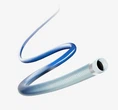
For medical procedures that require the insertion of a catheter into blood vessels or other body cavities, the use of microcatheters has become increasingly popular in recent years. Micro catheters are thin, highly flexible instruments used to access areas of the body that are difficult to reach through larger catheters. They are utilized in a variety of applications such as intravascular foreign body retrieval, embolization, and intra-arterial chemotherapy, among others. This review will provide an overview of the microcatheter technology, its advantages, and limitations.
Types of Microcatheters
Microcatheters are specialized catheters are available in various shapes, sizes, and lengths. Depending on their intended purpose, microcatheters can be categorized into different types. There are two common types of microcatheters, including pushable and steerable microcatheters.
Pushable micro catheters are designed to be pushed through the body to reach the intended target vessel. They are made from materials such as polytetrafluoroethylene (PTFE), polyimide, and a composite of metals. They are end-hole catheters that come in different diameters. Pushable microcatheters have gained popularity in recent years due to their safety profile and ease of use.
Steerable microcatheters are designed to be navigated within vessels to reach the desired target site. They are mostly utilized in accessing vascular malformations or aneurysms. They are highly maneuverable and can be steered by using a variety of techniques, including helical and rotating mechanisms.
Micro catheter Advantages
Microcatheters have many advantages over larger catheters, making them a useful tool in a variety of minimally invasive procedures. They have smaller diameters that can access even the smallest vessels in the body, making them ideal for navigating through complex networks of blood vessels. Microcatheters also offer high-resolution imaging of the target site during the procedure due to the smaller size of the catheter. Additionally, they are highly maneuverable, giving the operator more precision in positioning and deploying devices.
Moreover, microcatheters tend to be more flexible than standard catheters, which makes them easier to manipulate around tight curves, such as cerebral arteries. This increased flexibility reduces the risks associated with the placement of catheters in these complex vascular areas.
Another significant advantage of microcatheters is their safety profile. The smaller size of microcatheters reduces the risk of vessel perforation, trauma, or dissection. In addition, the smaller size of the microcatheter also reduces the amount of contrast media used, resulting in fewer adverse reactions to the contrast media.
Microcatheter Limitations
Despite the numerous benefits of using microcatheters in catheterization procedures, there are some limitations associated with their use. First, the small diameter of the microcatheter makes it difficult to deliver large or bulky devices through it. Also, microcatheters can be challenging to steer through tortuous vessels, and because they are more flexible than standard catheters, they may have a greater tendency to kink or buckle.
Another limitation of microcatheters is their length. Due to the small diameter and high flexibility, the length of microcatheters may be limited. This short length may require the use of multiple catheters when longer coverage is needed to access the desired target area.
Microcatheter technology has revolutionized catheterization procedures, providing a safer and more efficient alternative to standard catheters. Their flexibility, navigability, and high-resolution imaging capabilities have made them an essential tool for medical professionals in various invasive procedures. Despite their limitations, microcatheters continue to improve and have become a valuable asset in the medical field.