



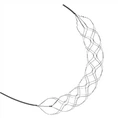
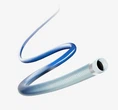


DredgerTM Neurovascular Thrombectomy Device
One of the latest designs in use today is the fully radiopaque closed-loop design. The DredgerTM neurovascular thrombectomy device is designed to minimize the risk of clot fragmentation and to create a closed-loop system to reduce the chances of thrombus deployment. The device is also designed to enhance clot retrieval, improve reperfusion, and reduce complications. The distal loop is designed to be flexible, allowing it to conform to the contours of the vessel and adapt to various artery diameters. This feature ensures that the device is effective in removing the clot, regardless of its size or location. The fully radiopaque design helps to visualize the device during the procedure, aiding the surgeon in navigating the device and ensuring proper placement in the vessel. In addition, the device's loop design creates a closed-loop system that reduces the chances of thrombus deployment. The closed-loop design ensures that the captured thrombus does not leave the device or lodge into other arteries. This reduces the risk of complications and improves patient outcomes. The use of neurovascular thrombectomy devices is appropriate in patients who have suffered an ischemic stroke and whose symptoms are severe enough to warrant intervention. These patients typically have a blood clot that is blocking a large artery leading to the brain, such as the middle cerebral artery or basilar artery. The device is used in combination with other medical therapies, such as intravenous thrombolytics, to optimize the patient's outcome.
Features&Advantages
1. The soft tip prevents damage to the inner wall of the blood vessel.
2. Large push wire enhances manipulation.

3. Comprehensive sizes meet a variety of different needs.
4. The front-end protective umbrella-type truck net design prevents small emboli from escaping to the far end.
5. The movable grid of the dual-layer stent realizes capturing, clamping and removal of thrombus.
6. Complete visible provides real-time visual feedback to assist clinicians during surgery.
7. The minimum radial outward force reduces vascular intima stimulation and damage.


Specifications
|
Catalogue No. |
Retriever Diameter(mm) |
Retriever Effective Length(mm) |
Recommended Vessel Diameter(mm) |
|
RD-3-20 |
3 |
20 |
1.5~2.5 |
|
RD-3-30 |
3 |
30 |
1.5~2.5 |
|
RD-4-30 |
4 |
30 |
2.0~3.5 |
|
RD-4-40 |
4 |
40 |
2.0~3.5 |
|
RD-5-20 |
5 |
20 |
2.5~4.5 |
|
RD-5-30 |
5 |
30 |
2.5~4.5 |
|
RD-5-40 |
5 |
40 |
2.5~4.5 |
|
RD-6-24 |
6 |
24 |
3.0~5.0 |
|
RD-6-30 |
6 |
30 |
3.0~5.0 |
|
RD-6-42 |
6 |
42 |
3.0~5.0 |
|
RD-7-30 |
7 |
30 |
3.5~6.0 |
|
RD-7-42 |
7 |
42 |
3.5~6.0 |


