



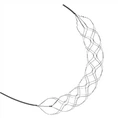

Blood clots are a major cause of morbidity and mortality worldwide. They can lead to stroke, heart attack, pulmonary embolism, and deep vein thrombosis, among other conditions. In recent years, there has been a significant development of clot retrieval devices aimed at treating these conditions. Clot retrieval devices are minimally invasive tools that aid in the extraction of clots from the body's blood vessels. This review focuses on the recent trends in clot retrieval devices and their role in the management of clot-related conditions.
Thrombectomy is the most common procedure for the removal of blood clots, and clot retrieval devices play a vital role in it. Several types of clot retrieval devices are available that enable the removal of clots from the vascular system. The devices differ in design, complexity, and the technology used. The three main types of clot retrieval devices available are suction thrombectomy catheters, mechanical thrombectomy devices, and aspiration thrombectomy devices.
Aspiration thrombectomy catheters are the simplest clot retrieval devices available. They use manual or mechanical suction to extract clots from the vasculature. Mechanical thrombectomy devices, on the other hand, are more complex tools with a motor-controlled mechanism that creates a suction force. They have proven to be more efficient than suction thrombectomy catheters, and in many cases, they work faster. They can be used as standalone systems or in combination with other thrombectomy devices.
Aspiration thrombectomy devices are another class of clot retrieval devices. They have multiple catheter designs that allow for the extraction of clots via the suction of the clot into the device. Aspiration thrombectomy devices can be single-lumen, dual-lumen, or tri-lumen, and their efficiency varies with the design. Recently, flowNS, a new aspiration system, was developed that uses a flexible catheter with multiple side-holes to allow for continuous passage of fluid while removing a clot.
Apart from the design of clot retrieval devices, there have also been considerable advancements in their technology, aimed at improving their efficacy and usability. For instance, manufacturers have designed clot retrieval devices with a balloon catheter that allows for the opening of constricted blood vessels before clot removal. Moreover, advanced technology has enabled real-time visualization of the clots during removal, which increases safety and efficiency.
Clot retrieval devices are increasingly being used in the management of clot-related conditions due to their minimally invasive nature and high success rate. For example, mechanical thrombectomy devices have been used extensively in the management of acute ischemic stroke, among other clot-related conditions. Recent studies have shown that the use of clot retrieval devices in the management of ischemic stroke leads to a higher chance of complete reperfusion and better outcomes for patients than traditional treatment methods.
In the future, there will be a continued development of clot retrieval devices aimed at improving their effectiveness and safety. With advancements in technology, there is likely to be greater innovation in the design of clot retrieval devices, leading to more efficient and safer tools for clot extraction. Moreover, more clinical studies will be conducted to explore the effectiveness of these devices, with the potential for the expansion of their use to other clot-related conditions.
In summary, clot retrieval devices have revolutionized the management of clot-related conditions, and recent advancements have led to more efficient and safer tools for clot removal. The continued development of clot retrieval devices will lead to even better outcomes for patients and a reduced incidence of morbidity and mortality due to clot-related conditions.