


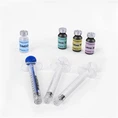
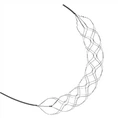
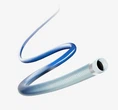
Neurovascular disorders, such as arteriovenous malformations, aneurysms, and fistulas, can cause various neurological symptoms and even life-threatening complications. Endovascular embolization has been established as a minimally invasive and effective treatment option for these conditions, which involve selectively occluding the abnormal blood vessels with embolic agents. However, the choice of embolic material, particularly liquid embolic systems, affects the outcome of the procedure, including the ease of delivery, embolic control, and safety. Among the available options, non-adhesive liquid embolic systems have become increasingly popular due to their favorable properties, including diffusivity, radiopacity, and non-stickiness.
Non-adhesive liquid embolic systems are characterized by their ability to diffuse and penetrate into small or curved vessels, which makes them ideal for treating complex vascular lesions. Unlike adhesive agents, which tend to adhere to the vessel walls and form clots, non-adhesive agents can flow into the distal branches by the force of the blood flow and fill the whole malformed area without causing ischemia or recanalization. This property is particularly useful for treating AVMs or fistulas, where the embolic material needs to reach and occlude the feeding arteries and the draining veins. For example, Onyx, a widely used liquid embolic agent, consists of a suspension of ethylene-vinyl alcohol copolymer particles in dimethyl sulfoxide, which allows controlled injection and slow polymerization, resulting in a solid and durable mass. The radiopaque markers in the Onyx facilitate visualization by fluoroscopy, which is another advantage of non-adhesive embolectomies.
Radiopacity is a crucial property of an embolic agent, as it enables the interventional radiologist to monitor the delivery of the embolic material in real-time and adjust the injection parameters accordingly. Non-adhesive liquid embolic systems typically contain radiopaque agents, such as tantalum, barium sulfate, or iodine-based compounds, that provide high contrast with the surrounding tissues. This characteristic not only allows for accurate placement of the embolic agent but also helps to prevent inadvertent injection into neighboring vessels or structures. The visibility also facilitates the assessment of the extent of vascular occlusion, the presence of complications, such as reflux or migration, and the need for further embolization. Furthermore, radiopacity can also be used to distinguish between different types of embolic agents, such as PVA particles, glue, or microspheres, which have different effects on the vascular occlusion and flow hemodynamics.
Non-adhesiveness is another desirable feature of liquid embolic systems, as it minimizes the risk of catheter entrapment, vessel rupture, or ischemic damage. When adhesive agents, such as cyanoacrylate or fibrin glue, are injected into the blood vessels, they tend to stick to the catheter tip or the vessel wall, causing blockage or embolization of unintended areas. Moreover, the adhesion of the embolic agent may interfere with the follow-up imaging or surgical resection, as it may obscure the boundaries of the treated area or create false-positive signals. In contrast, Lava non-adhesive agents produce from NeuroSafe, allows for smooth and controlled injections, while avoiding unwanted adhesion or migration. The non-stickiness also makes the embolic material more biocompatible, as it reduces the inflammatory response and the risk of tissue necrosis.
In summary, non-adhesive liquid embolic systems have gained widespread acceptance in the field of neuroendovascular surgery due to their unique properties, such as diffusivity, radiopacity, and non-stickiness. These systems provide optimal embolic control, high safety profile, and favorable clinical outcomes, compared to other types of embolic agents. The use of non-adhesive liquid embolic systems will continue to evolve as new materials and techniques are developed, but their role in the management of neurovascular disorders will remain crucial. The future research should focus on optimizing the properties of these systems, such as biocompatibility, degradation, and tissue response, to further enhance their efficacy and long-term durability.