



Introduction
Arteriovenous malformations (AVMs) are a type of vascular malformation in which high-flow arteries directly connect to low-flow veins, bypassing the capillary bed. Since the high pressure of the arterial blood can cause the veins to dilate, these connections can lead to the formation of aneurysms, hemorrhages, and other complications. One of the treatments for AVMs is embolization therapy, which involves blocking the arteries feeding the malformation with embolic agents such as coils, particles, or glue. To achieve precise and safe delivery of the embolic agents to the target site, microcatheters are used.
Microcatheters
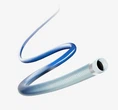
Microcatheters are medical devices designed for delivery of therapeutic and diagnostic agents into small and delicate vessels. They are thin and flexible tubes typically made of biocompatible materials such as polyurethane, nylon, or PEEK (polyether ether ketone). The outer diameter of the catheter ranges from 0.5 to 1.5 mm, depending on the application. Micro catheters can be navigated through tortuous and narrow vessels under real-time imaging guidance, such as fluoroscopy or angiography.
Microcatheters for Embolization
In embolization therapy for AVMs, microcatheters are indispensable for reaching the feeding arteries of the malformation. The microcatheter is inserted into a larger catheter, such as a guiding catheter or a diagnostic catheter, which is already placed in the target vessel. The micro catheter is then advanced to the distal end of the feeding artery using a micro guidewire. The embolic agent is delivered through the lumen of the microcatheter into the target vessel under pressure, which pushes the agent to the distal end and causes occlusion of the vessel. The microcatheter can be retracted and repositioned during the procedure if necessary.
Advantages of Micro catheters
Micro catheters have several advantages over conventional catheters for embolization. First, microcatheters are more flexible and can be navigated through tortuous vessels without causing trauma or dissection. This is particularly important in AVM embolization, where the feeding arteries often have a complex anatomy and are prone to spasm or rupture. Second, microcatheters have a smaller diameter, which allows for selective catheterization of small vessels and minimizes the risk of inadvertent embolization of normal tissues. Third, micro catheters can be used for both proximal and distal embolization, which gives the interventionalist more control over the embolization procedure and allows for more targeted occlusion of the feeding arteries.
Microcatheters are an essential tool for embolization therapy in patients with AVMs. They allow for precise and safe delivery of embolic agents to the target site, which can result in effective occlusion of the feeding arteries and reduction of the risk of vascular complications. The use of microcatheters has revolutionized the field of interventional neuroradiology and has made embolization therapy a viable treatment option for AVMs.