



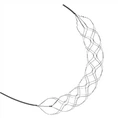
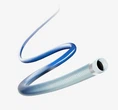
There is no strict definition of microcatheter. Catheters with an outer diameter less than 3 French size are usually called microcatheters. French size is simply F, or Fr, 3Fr=1mm, that is, 1F≈0.33mm.
Microcatheters are widely used in peripheral intervention, cardiovascular intervention and neurological intervention, with prices ranging from several thousand yuan to nearly ten thousand yuan. From peripheral to cardiac to neurointerventional, the technical difficulty of production increases significantly.
The length of the microcatheter from the proximal segment to the distal end is usually 130-160CM. Peripheral intervention usually uses microcatheters with a length of 130CM. Neurointervention usually uses microcatheters with a length of more than 150CM. The inner diameter (ID) of the microcatheter remains unchanged, and the outer diameter (OD) gradually becomes tapered from the proximal end to the distal end, so the body of the microcatheter is tapered.
The performance of the microcatheter is determined by the comprehensive balance of the following indicators. The distal end needs to be flexible to maintain safety, and the proximal end needs to be hard to enhance maneuverability.
Kink resistance: The pipe wall must have support and not collapse or kink when bending; this is achieved by the pipe polymer material and the metal layer.
Pushability: The near-segment control can be accurately transmitted to the far-end, and the resistance received by the far-end can be accurately fed back to the near-segment.
Trackability: The catheter can climb along the tortuous blood vessels guided by the guide wire without forcibly straightening the guide wire. The tube body is extremely flexible and the tube lumen always remains round.
Torquebility: When the near section rotates, the far end can maintain 1:1 synchronous rotation.
Shaping properties of the head: Shaping facilitates microcatheter access to angled branch vessels.
Material compatibility: whether liquid embolic agents such as DMSO can be injected.
These properties are accomplished by complex material science, production processes, and quality systems. It is necessary to reduce the pipe diameter while retaining the above characteristics, which is not easily achieved.
From the inside to the outside, microcatheters are divided into:
PTFE Linear: It is a polymer intermediate product completed through the extrusion process. Currently, it is all imported. The main reason is that it is restricted by the formula of the polymer ingredients, as well as the extrusion wall thickness and tolerance. PTFE has very good lubricating properties and is hydrophobic. When the guidewire covered with a hydrophilic coating is lubricated by heparin saline, it is very easy to pass through the microcatheter lumen with very little friction.
Metal layer: Mainly divided into two processes: coiling (or spiral) and braiding. The former is called coiling, and the latter is called braiding. The metal layer of neurointerventional microcatheters usually uses stainless steel wire, which has good shaping performance. Some microcatheters use le Nitinol (a non-magnetic alloy of nickel and titanium), which is a memory metal suitable for pre-treatment. Shaped microcatheters, but poor shaping properties. Coiling or Spiral has good flexibility, but its performance in conducting pushing force is slightly poor.
Outer Jacket: It is also a polymer intermediate product completed by the extrusion process. The material is usually Pebax, PU or nylon.
According to the grade of the microcatheter, it can be divided into 3-7 segments from the proximal end to the distal segment, and the thickness of each segment gradually decreases. The greater the number of segments, the higher the complexity of the mechanical parameters.
Peripheral microcatheters is divided into three sections, with a proximal OD of 2.9 F, a distal OD of 2.7 F, an ID of 0.025”, and a tube length of 130cm.
Most neurointerventional microcatheters are divided into five sections, such as a microcathter with proximal OD 2.4F, distal OD 1.7F, ID 0.0165" (0.42mm), and tube length 150cm.
The most advanced microcatheter for neurointervention is divided into seven sections. Proximal OD 2.1F, distal OD 1.6F, ID 0.0165” (0.42mm), tube length 156cm.
For the Outer Jacket layer, many domestic suppliers can meet the requirements from the near section to the fourth and fifth sections. However, for the sixth and seventh sections, domestic suppliers are currently unable to meet the technical requirements.
These polymer/metal layers are fused together through Lamination technology. This process is very difficult and cannot be inspected because inspection is destructive. If the lamination is not done well, the mechanical properties of the pipe body will not meet the standards.
The handle (Hub) of the microcatheter is generally transparent, making it easy to see the passage of the guide wire and other instruments. The ordinary Hub process is glue. The best process is direct injection molding, which integrates the handle and the tube body. The inner cavity has a balanced transition and the tube body has good sealing. In addition to the connection between the handle and the pipe body, install Strain Relief (also known as Sleeve).