


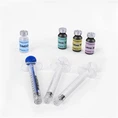
LavaTM EVOH liquid embolic is a new type of liquid embolic material that has been developed for endovascular treatment of vascular malformations such as arteriovenous malformations (AVMs) and brain aneurysms. This material has unique properties that make it highly effective in occluding blood vessels while also being safe for use in the human body.
One of the most important features of LavaTM liquid embolic agent is its ability to diffuse and penetrate into even the smallest blood vessels. This property is known as "diffusivity" or "diffusion coefficient", and it determines how well the embolic material can spread out and fill the targeted blood vessel. LavaTM liquid embolization agent has a very high diffusion coefficient, which means that it can easily and quickly spread throughout the vascular network, filling all the nooks and crannies of the abnormal blood vessels that need to be occluded.

Another key feature of EVOH embolic agent is its ability to show up clearly under imaging modalities such as X-ray, CT scan or MRI. This property is called "radiopacity" or "radiographic visibility", and it is crucial for guiding the embolization procedure and ensuring that the embolic material is distributed precisely where it needs to be. EVOH liquid embolic system has a high radiopacity, which enables the surgeon to track its movement inside the blood vessels and check the degree of occlusion of the targeted vessels.

In addition to its diffusivity and radiopacity, Lava also has other properties that make it advantageous for endovascular therapy. For example, it is biocompatible, meaning that it does not cause any adverse reactions or toxicity to the body's tissues, cells or organs. It is also non-adhesive, meaning that it does not stick to the catheter or the walls of the blood vessels, which reduces the risk of catheter entrapment or vessel damage.
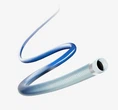
Non-adhesive liquid embolic agent is delivered to the targeted blood vessels via a catheter that is inserted through a small incision in the skin and navigated through the arterial system using fluoroscopy or other imaging techniques. Once inside the desired vessel, the liquid embolic material is slowly injected until the vessel is occluded or the desired degree of embolization is achieved. The surgeon can monitor the procedure in real-time using imaging modalities and adjust the amount and rate of injection as necessary.