


Neurointerventional technology is an increasingly popular treatment method, mainly used to treat diseases of the central nervous system. In recent years, large-diameter aspiration catheters have become one of the important devices for neurointerventional therapy, with the advantages of speed, accuracy, safety, and non-invasiveness. This article aims to evaluate the performance of large-diameter suction catheters and provide practical reference for clinical treatment.
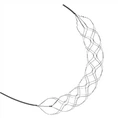
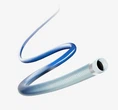
A large-diameter aspiration catheter is a sophisticated medical device mainly used to extract blood clots, embolisms and other substances from the body to restore blood flow. Its larger diameter greatly improves the suction efficiency and can quickly and accurately remove blood clots, embolisms and other obstacles in the body. In neurointerventional treatment, large-diameter aspiration catheters can be used in various cerebrovascular diseases, brain tumors, spinal cord tumors, spinal tumors, etc., with the advantages of accurate diagnosis, diverse treatment options, and short recovery period.
To evaluate the performance of large-bore aspirationcatheters, we performed a series of experiments. The first is equipment testing before the experiment, including basic parameters such as the inner diameter, outer diameter, length, and curvature of the catheter; then three-dimensional simulation and model establishment are performed to simulate and observe the specific use of the catheter; and finally, the actual operation experiment is performed to observe the catheter The suction efficiency, removal effect, safety, etc. Experimental results show that the large-diameter aspiration catheter has good performance and can be effectively used in clinical treatment.
In actual use, we found that the performance of large-diameter aspiration catheters is affected by many factors. First of all, there are individual differences among patients, including different factors such as the location, shape, and size of the lesions. It is necessary to select the appropriate catheter model and treatment plan based on the specific situation. Secondly, the operator's technical level and experience require certain professional knowledge and practical operation ability to avoid misoperation and accidents. Finally, there is the quality and stability of the equipment itself. It is necessary to choose high-quality products and carry out careful maintenance and upkeep to ensure the long-term stability and reliability of the equipment.
All in all, the large-diameter aspiration catheter is a neurointerventional device with wide application value and plays an important role in clinical treatment. Evaluating their performance through experiments can help improve treatment efficiency, reduce risks and improve efficacy. We hope that everyone can be more active in learning and applying neurointerventional technology to bring more health and well-being to patients.