


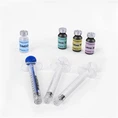
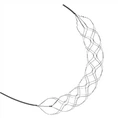
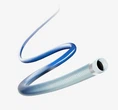
Interventional radiology is a rapidly advancing field of medicine that involves the use of minimally invasive procedures to diagnose and treat various medical conditions. Embolization is one such procedure that involves the use of embolic agents to obstruct or block the blood flow to a specific area of the body, such as a tumor or an aneurysm. This technique has revolutionized the treatment of many diseases and has become a standard procedure in interventional radiology.
Embolic agents are materials that are injected into a blood vessel to block or slow down the blood flow to a specific area of the body. The choice of embolic agent depends on the nature of the target vessel or lesion, and the desired effect. There are various types of embolic agents available with different properties and mechanisms of action, which can be broadly classified into two categories: particulate and liquid.
Particulate agents are small particles that are injected into the blood vessel and block the blood flow by physically occluding the vessel. These particles can be made of various materials such as microspheres, polyvinyl alcohol (PVA) particles, and gelatin foam. Microspheres are tiny beads made of biocompatible materials that can vary in size and shape. They are commonly used to treat liver tumors, uterine fibroids, and prostate cancer. PVA particles are also small beads that can be injected into the blood vessels to block blood flow to a particular area. They are particularly useful in the treatment of uterine fibroids, arteriovenous malformations, and traumatic bleeding. Gelatin foam is a more temporary embolic agent that is used to block blood flow during procedures such as uterine artery embolization, hepatic artery occlusion, and renal artery embolization.
Liquid embolic agents are materials that are injected as a liquid and solidify to obstruct the blood flow. These agents can be made of various materials such as ethylene vinyl alcohol (EVOH), cyanoacrylate, and Lava. EVOH is a biocompatible polymer that is commonly used to treat arteriovenous malformations, dural arteriovenous fistulas, and aneurysms. Cyanoacrylate is a glue-like substance that polymerizes when it comes into contact with blood. It is used to treat vascular malformations, aneurysms, and bleeding in the gastrointestinal tract. Lava is a liquid embolic agent that solidifies when it comes in contact with a solvent. It is used to treat arteriovenous malformations, aneurysms, and certain brain tumors.
The use of embolic agents in interventional radiology has several advantages. First, it is a minimally invasive procedure that does not require incisions. This means that patients have smaller scars, less pain, and a shorter recovery time compared to traditional surgical procedures. Second, embolization can be performed under local anesthesia, which makes it safer for patients who cannot tolerate general anesthesia. Third, embolization is a precise and targeted procedure that can selectively block blood flow to the target area, without affecting the surrounding healthy tissues. This reduces the risk of complications and improves the outcome of the procedure.
All in all, embolic agents are an essential tool in the field of interventional radiology. They have revolutionized the treatment of many medical conditions by providing a safe and effective alternative to traditional surgical procedures. Particulate agents and liquid embolic agents have different properties and mechanisms of action, which make them suitable for different medical conditions. However, the choice of embolic agent depends on the expertise of the interventional radiologist and the specific needs of the patient. Embolization has many advantages over traditional surgical procedures, and it is likely that its use will continue to increase in the years to come, contributing to the improvement of patient outcomes.