




Thrombus size is a predictor of prognosis in patients with acute large vessel occlusion ischemic stroke who undergo endovascular therapy, as it may lead to more complex and longer surgery. In addition, the increase in the number of thrombectomy and the decrease in the degree of recanalization are associated with the occurrence of complications such as more severe ischemic injury, increase in infarct volume, distal embolism, and intracranial hemorrhage, seriously affecting the functional prognosis of patients. If the volume or length of the thrombus is related to these surgical outcomes, then the thrombectomy strategy or device selection can be improved based on the thrombus volume to improve the patient's surgical outcome and thereby improve the patient's prognosis.
The prognostic value of thrombus volume in thrombectomy remains controversial, and it is unclear whether thrombus volume has a stronger prognostic value than thrombus length. In addition, studies have shown that similar treatment results can be achieved using stent retriever or aspiration device, but the impact of thrombus volume on the outcomes of different surgical methods is unclear. Therefore, the purpose of this study was to use thrombus volume as a proxy for thrombus length to evaluate its ability to predict the prognosis of patients with thrombectomy, and to evaluate the difference in surgical outcomes of patients with different thrombus removal treatment methods.
Thrombus volume has been found to be more closely related to surgical outcome and functional outcomes than thrombus length. An increase in thrombus volume will lead to an increase in the number of thrombectomy times, a decrease in good prognosis rate, and a decrease in prognostic score. Thrombus volume and thrombus length are not related to eTICI, symptomatic intracerebral hemorrhage, and FAR. This shows that the increase in thrombus size will lead to an increase in the difficulty of thrombectomy surgery and result in more permanent and severe neurological dysfunction. Functional outcomes are more affected by thrombus volume when using stent retrieval than when using aspiration as a first-line thrombectomy device.
Studies have shown that patients with larger thrombi require more thrombectomy and have worse functional outcomes regardless of reperfusion status. Several studies have revealed a correlation between the number of thrombectomy times and functional prognosis. This association may be due to an increased incidence of hemorrhagic complications, increased procedure time, and sustained cerebral ischemia caused by impaired reperfusion microvasculature. In addition, more physical stress and vessel wall damage during the operation may induce an inflammatory cascade, leading to impaired microvascular reperfusion.
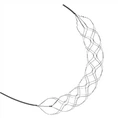
This study is the first to perform an interaction analysis of first-line device selection and thrombus volume. The interplay between first-line device selection and thrombus volume can be explained by pathophysiological and physical mechanisms. The important difference between stent retrieval and aspiration is how the clot is removed. In aspiration, only the proximal portion of the thrombus is contacted with the device, whereas in stent retriever, traction is caused by passing through the thrombus and releasing the stent, leaving a larger contact surface with the thrombus. The size of the thrombus contact surface may influence functional outcome in three different ways. First, due to the larger contact surface, stent thrombectomy can be performed more easily and successfully in patients with larger thrombi. Second, a larger contact surface may cause more friction and adhesion during the procedure, leading to a higher incidence of intracranial hemorrhage and activation of more inflammatory cascades that are not associated with those after surgery. reflow phenomenon, thereby affecting functional prognosis. Third, previous studies have shown that the smaller the ratio of thrombus length/stent length, the greater the probability of achieving FAR, which in turn affects functional prognosis.
The results of this study are consistent with the second theory. The interaction between first-line device choice and thrombus volume suggests that stent retriever is associated with worse prognosis than aspiration in patients with larger thrombus size. We were unable to verify this causal pathway because we did not include asymptomatic intracranial hemorrhage or no-reflow as observations. In addition, due to lack of relevant data, we were unable to verify the impact of the thrombus length/stent length ratio in the third theory.
Another explanation for the interaction between first-line device selection and thrombus volume is selection bias. The interaction between stent retrieval and thrombus size may also be indirectly affected if surgeons prefer aspiration for smaller or more treatable thrombi. In addition, stent thrombectomy is the standard treatment modality for thrombectomy before aspiration. As the time goes, the optimization of thrombectomy procedures and the accumulation of surgeon experience will affect patient prognosis, which may also affect the interaction between stent thrombectomy and thrombus volume.