



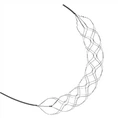
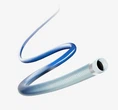
Mechanical thrombectomy can be divided into two categories: stent retriever thrombectomy and direct aspiration thrombectomy. Stent retrieval device thrombectomy uses a microcatheter to approach the thrombus, and then introduces a stent retrieval device through the access microcatheter for thrombus retrieval.
Direct aspiration thrombus uses the principle of negative pressure suction to reach the proximal end of the blood vessel occluded by the thrombus through the thrombus aspiration catheter or reperfusion catheter, and suck out the thrombus. At present, stent retriever thrombectomy is the most common way of mechanical thrombectomy.

Stent thrombectomy uses microcatheter technology to advance the stent thrombectomy device along the arteries of the lower extremities to the intracranial artery through the arterial channel in the body. The revascularization device at the front of the catheter actively "captures" the thrombus blocking the blood vessel and restores the blood vessel.

Direct aspiration thrombectomy is a fast, safe, and efficient thrombus removal technique. It is mainly guided to the surface of the clot through a large-diameter catheter and starts strong aspiration, which can reduce the use of medical equipment and the time for vascular recanalization. Direct aspiration thrombectomy is to push a large inner diameter catheter to the proximal end of the blocked cerebral artery with the aid of a guide wire through the femoral artery approach, and automatically suck it with an external suction pump or manually operate it with a syringe to form a sufficient space in the catheter. The negative pressure and suction force to suck out the thrombus.