


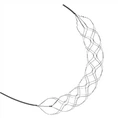
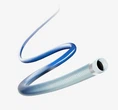

RenovaTM Endovascular Coiling is a minimally invasive treatment approach for cerebral aneurysms where a neurointerventional radiologist places a small catheter through the groin or arm up into the vasculature of the brain to reach the aneurysm. They then deploy small detachable metal coils within the aneurysm sac to promote thrombosis and prevent rupture of the aneurysm. 3D coils and 2D coils are two primary types used for this procedure. In endovascular coiling, 2D coils are often used for packing and finishing the aneurysm. These coils are made up of platinum which is a biocompatible, non-reactive, and non-toxic material. They are designed to be super-soft, flexible, and with excellent conformability, which makes them especially suitable for treating some of the most difficult aneurysms to reach and fill entirely. The smallest 2D spring coils are only 1mm in diameter, making them an excellent choice for the treatment of small aneurysms. The small size of these coils allows them to be placed in the tightest of spaces, making them ideal for the deeper and more complex aneurysms. A major advantage of 2D coilings is that they allow for better packing of the aneurysm by creating a tight, dense plug in the aneurysm neck, which leads to a lower risk of re-opening or recurrence after treatment. As such, 2D coils are an essential tool in the endovascular coiling treatment of cerebral aneurysms. 3D coils are another type of coil used to treat cerebral aneurysms through endovascular coiling. Like 2D spring coils, they are also made of platinum and are designed to promote thrombosis within the aneurysm sac. Helical coils are unique in their design due to their 3D shape. Unlike 2D coils, which are best suited for filling and finishing the aneurysm neck, helical coils are better suited for filling the aneurysm body. They are designed in such a way that they promote the flow of blood into the aneurysm sac, creating a dense packing of the coils within the aneurysm body.
1.From frame to finish, various softness levels and sizes cover a variety of cases.
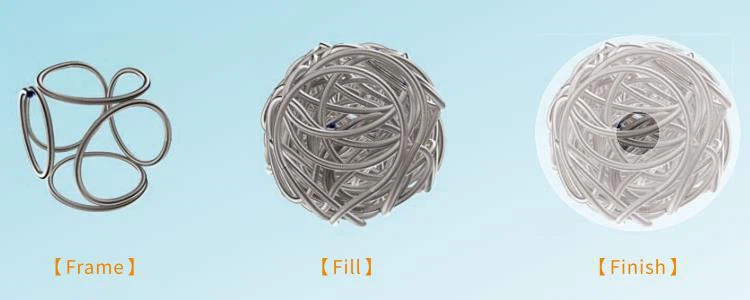
2. Open loop design minimizes compartmentalization and distributes evenly.
3. The first 1.5 loops 25% smaller than the stated secondary coil diameter reduces risk of coil herniation.
4. Shorter detachment zone greatly minimizes kick-back microcatheter.

5. Frame securely, fill uniformly and finish by seeking voids within aneurysm.

RenovaTM 3D Detachable Coils

RenovaTM Helical Detachable Coils