



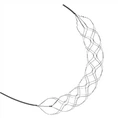
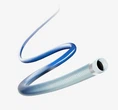

RenovaTM aneurysm coil embolization is a minimally invasive technique that involves placing soft metallic coils within the aneurysm sac in order to promote thrombosis and prevent potential rupture. This procedure has gained popularity in recent years due to its effectiveness, safety, and ease of use, providing patients with a rapid and smooth recovery. It is indicated for aneurysm coil embolization depend on the size, location, and shape of the aneurysm, as well as the patient's clinical condition. Generally, aneurysms that are smaller than 10 mm in diameter, have a favorable neck anatomy, and are accessible angiographically are suitable for coil embolization. Although aneurysms that are larger or more complex may require other types of treatment, but coil embolization can be a viable option for many patients, especially those who are not candidates for open surgery or who prefer a less invasive approach. One of the main characteristic of aneurysm coil embolization is its smooth technique, which allows for precise and controlled deployment of the coils within the aneurysm sac, avoiding any damage or distortion of the adjacent vessels or tissues. During the procedure, a microcatheter is introduced into the aneurysm via a femoral or radial access, under fluoroscopic guidance, and navigated to the aneurysm neck, where the coils are released from the catheter and compacted within the aneurysm sac. This process is repeated until the aneurysm is completely filled with coils, forming a stable mass that prevents blood flow into the aneurysm and promotes its healing over time. The success rate of aneurysm coil embolization varies depending on several factors, such as the size, location, morphology, and coiling density of the aneurysm, as well as the operator's skills and experience. However, most studies have reported a high rate of occlusion and low rate of recurrence
Product Features
1. Optimized Shapes
- The open loop configuration conforms to different aneurysm shapes and minimizes compartmentalization.
-The first1.5 loops are 25% smaller than the stated secondary coil diameter, reduced risk of coil herniation.
-Open center design, allowing for concentric filling
2. Proprietary instant mechanical detachment system by manual break
-Shorter detachment zone greatly minimizes kick-back microcatheter
-Detachment tactile sense and visual sense duplex feedback, more reliable.
3. Hybrid delivery shaft is constructed from a combination of materials with different attributes to provide an optimal balance of flexibility and pushability. The flexible tip of the shaft provides a smooth curve that enhances its ability to navigate challenging aneurysm geometries. The pushability of the device ensures the accurate placement of the coil while maintaining its stability.

4. The stable frame, uniform fill and dense finish are crucial features of aneurysm coil embolization.
-It refers to the ability of the coils to form a stable and uniform frame inside the aneurysm cavity after they have been inserted. This is essential to ensure that the aneurysm remains sealed off and does not rupture. During the insertion process, the surgeon will manipulate the coils to create a stable frame that allows blood flow to stop within the aneurysm. This ensures that the coils do not get dislodged, and the aneurysm remains sealed off successfully.
-The dense finish is another critical characteristic of Aneurysm Coil Embolization. After the coils have been placed in the aneurysm, they will start to fill the cavity gradually, creating a dense finish. This dense finish ensures that the empty space left by the aneurysm is entirely filled, reducing the risk of blood flow

Specifications for Coils
RenovaTM 3D Detachable Coils

RenovaTM Helical Detachable Coils


