



GluttonTM Aspiration Catheters for Stroke
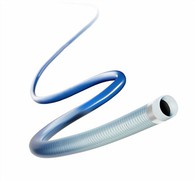
GluttonTM Aspiration Catheters for stroke has a flexible shaft that enables it to navigate through the twisty and narrow blood vessels of the brain. It has a distal tip that can be selectively navigated into the affected blood vessel with the help of a microcatheter. The distal tip of the catheter is soft and rounded, which helps to prevent damage to the blood vessels during the procedure. It is indicated for patients with acute ischemic stroke caused by large vessel occlusion (LVO) in the intracranial arteries, such as the middle cerebral artery (MCA), internal carotid artery (ICA), and basilar artery (BA). The ideal candidate for aspiration thrombectomy is a patient who presents within 6 hours of symptom onset, has a large clot burden, and has not responded to intravenous thrombolysis treatment. Patients with contraindications for thrombolysis, such as recent surgery or bleeding disorders, may benefit from aspiration catheter as the primary treatment option.
Features&Advantages
1. Unique structure of coil and braiding has excellent flexibility and maneuverability.

2. 0.072 inch larger lumen has a higher aspirating efficiency for capturing large clots.

3. Distal multi-segment design can be used for tracking and navigation.
4. Proximal composite polymer enhances pushability.
5. A hydrophilic coating is applied to reduce friction and facilitate smooth insertion and navigation.
6. A radiopaque marker is located at the distal end of the catheter for visualization under fluoroscopy.
FAQ
Q1: What is a revascularization aspiration catheter?
A1: An aspiration catheter is a medical device used to remove blood clots or other blockages from large blood vessels in the brain. It is inserted through a small incision in the groin or arm and guided up to the affected blood vessel using imaging technology, such as X-rays or CT scans.
Q2: How does a thrombus aspiration device work?
A2: The intracranial catheter is designed with a flexible tip that can be manipulated through the blood vessels to reach the blockage. Once the catheter is in place, a vacuum is created in the catheter to suction out the clot or other material causing the blockage. The suction is created by a syringe or a mechanical device attached to the catheter.
Q3: Who needs an aspiration thrombectomy catheter?
A3: Aspiration catheters are commonly used to treat ischemic stroke, which occurs when a blood clot blocks blood flow to an area of the brain. They may also be used to treat other conditions, such as intracerebral hemorrhage or carotid artery stenosis.